


You don’t have any Active Subscription.
Subscribed with another email? Logout and Login with that one.
Account subscription benefits alongside Premium Stories, Editorials, Opinions and more. Unlock these with Subscription
Additional Subscription Benefits
Need help with your subscription?
The View From India Looking at World Affairs from the Indian perspective.
First Day First Show News and reviews from the world of cinema and streaming.
Today's Cache Your download of the top 5 technology stories of the day.
Science For All The weekly newsletter from science writers takes the jargon out of science and puts the fun in!
Data Point Decoding the headlines with facts, figures, and numbers
THEdge At the cutting edge of education and careers
Health Matters Ramya Kannan writes to you on getting to good health, and staying there
Gender Agenda Stories from beyond the binary.
On Books Books of the week, reviews, excerpts, new titles and features.
Published - August 24, 2026 12:09 am IST - CHENNAI
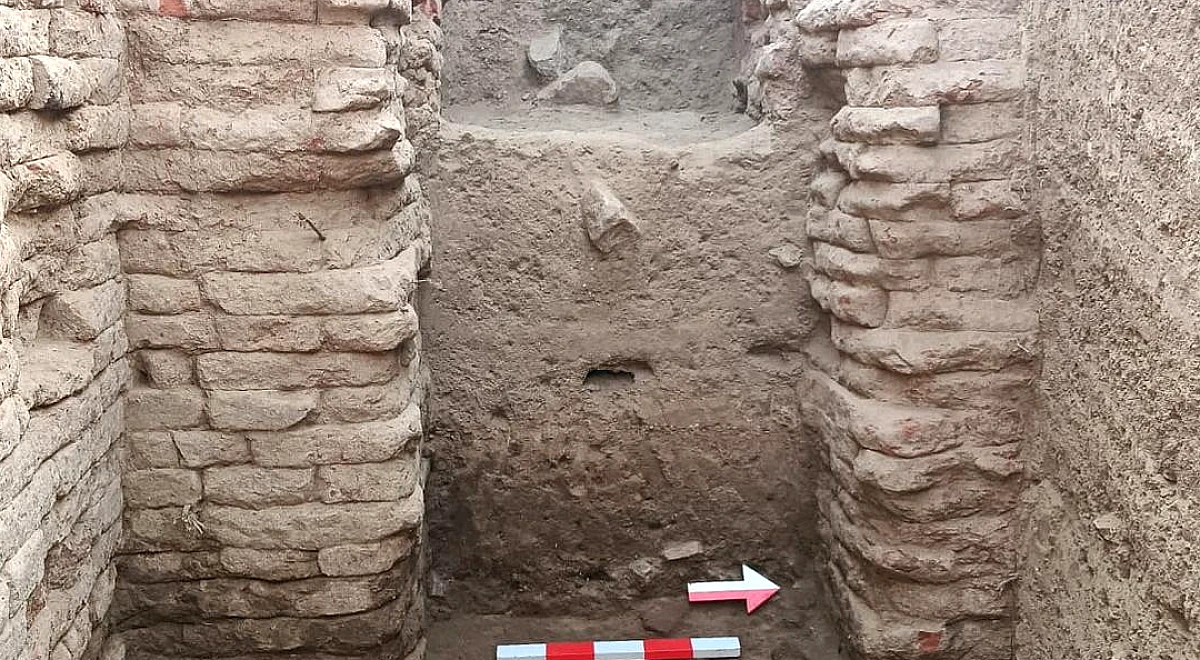
The hero stone unearthed by archaeologists in a brick well at Malayadipatti in Tenkasi district.
A hero stone inscription, dating back to the Sangam period, has been unearthed by archaeologists at Malayadipatti village near Karivalamvandanallur in Tenkasi district, where the Tamil Nadu State Department of Archaeology (TNSDA) is conducting excavations.
According to official sources in the TNSDA, the inscription was found in a brick well with steps,dating to the Sangam period. , which was in use during the Sangam period. It appears to have fallen into disuse in later years, and subsequently filled with stones and bricks. The hero stone was found among the materials used to fill the well.
Official sources said the hero stone measures 1 m in length and 0.30 m in width.
The inscription on the hero stone is in a script representing a transitional stage from Tamil-Brahmi to Vattezhuthu. It contains four lines: ‘Karukkan’, ‘Sulagan’, ‘Nannang’ and ‘Kodiyan’. Archaeologists interpret it as an indication that the hero stone was erected in memory of Nannang Kodiyan, son of Karukkan Sulagan in the Fifth Century.
During the Sangam and post-Sangam periods, figures were not carved on hero stones. Those found at Pulimankombai, Aappanur and Mallikapuram, for instance, do not bear depictions of the warriors. Similarly, the hero stone unearthed at Malayadipatti does not depict the warrior, official sources further said.
Excavations at Malayadipatti have revealed a range of artefacts that shed light on the life, occupation, and trade of the people who lived there during the Sangam period.
Published - August 24, 2026 12:09 am IST
Terms & conditions | Institutional Subscriber
Comments have to be in English, and in full sentences. They cannot be abusive or personal. Please abide by our community guidelines for posting your comments.
We have migrated to a new commenting platform. If you are already a registered user of and logged in, you may continue to engage with our articles. If you do not have an account please register and login to post comments. Users can access their older comments by logging into their accounts on Vuukle.


Comments ()
Be the first to share your perspective on this story!