


You don’t have any Active Subscription.
Subscribed with another email? Logout and Login with that one.
Account subscription benefits alongside Premium Stories, Editorials, Opinions and more. Unlock these with Subscription
Additional Subscription Benefits
Need help with your subscription?
The View From India Looking at World Affairs from the Indian perspective.
First Day First Show News and reviews from the world of cinema and streaming.
Today's Cache Your download of the top 5 technology stories of the day.
Science For All The weekly newsletter from science writers takes the jargon out of science and puts the fun in!
Data Point Decoding the headlines with facts, figures, and numbers
THEdge At the cutting edge of education and careers
Health Matters Ramya Kannan writes to you on getting to good health, and staying there
Gender Agenda Stories from beyond the binary.
On Books Books of the week, reviews, excerpts, new titles and features.
Updated - August 24, 2026 12:31 am IST - Bengaluru:
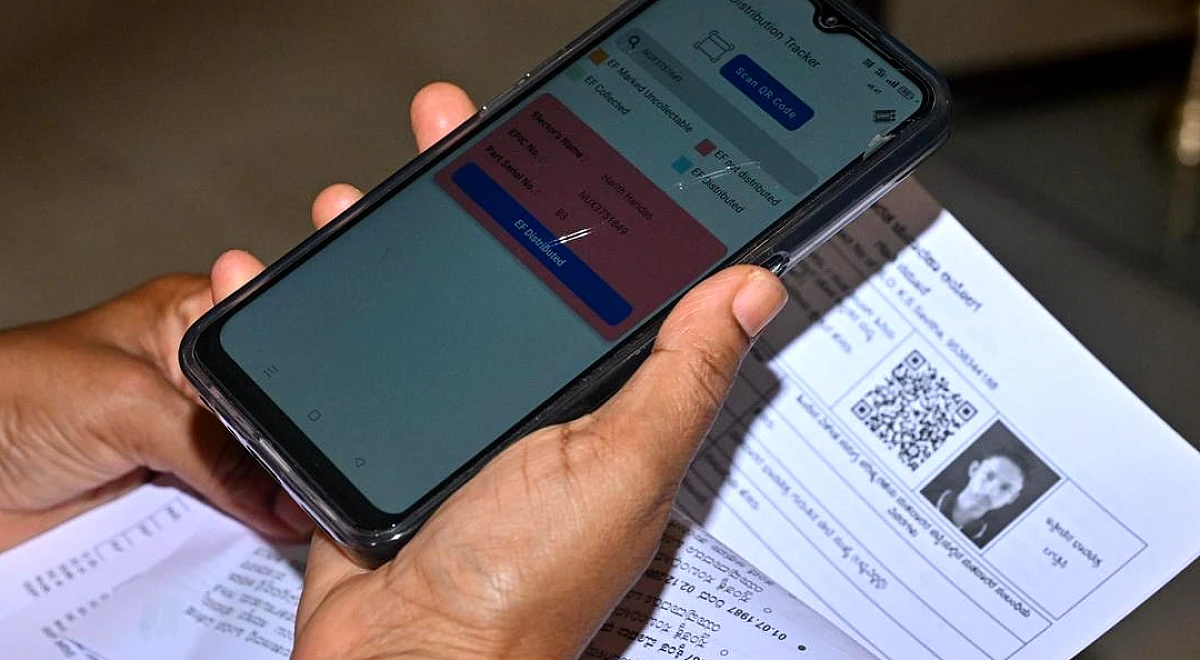
Election Commission of India’s guidelines allow the Electoral Registration Officer (ERO) or Assistant Electoral Registration Officer (AERO) handling the case to either conduct a hearing or directly mark the voter as “Found OK” or “Found Not Eligible”. | Photo Credit: H.S. Manjunath
Unlike voters marked as “unmapped” or those flagged for “logical discrepancy”, who will have an assured chance to go for a hearing, voters marked as “Others” can be deleted from the electoral roll without even being given a hearing.
Also read | SIR reports 16.38 lakh deceased voters, four times Karnataka’s average annual deaths
The Election Commission of India’s guidelines allow the Electoral Registration Officer (ERO) or Assistant Electoral Registration Officer (AERO) handling the case to either conduct a hearing or directly mark the voter as “Found OK” or “Found Not Eligible”.
The Karnataka Chief Electoral Officer’s booklet on post draft roll publication activities states, “For electors classified as Others, the ERO/AERO is permitted to mark elector as Found OK or Found Not Eligible directly or ERO/AERO can schedule the hearing also.”
The guidelines do not say on what grounds an ERO/AERO can directly declare an “Others” voter “Not Eligible”. They also do not clearly state what criteria a voter has to meet to be considered “eligible” in the first place.
As of August 19, more than 3.83 lakh voters in Karnataka have been marked as “Others”.
Even when an ERO/AERO does conduct a hearing, the rules continue to give the officer wide discretion.
The guidelines further state that when an “Others” voter is called for a hearing, the officer has to verify the voter’s documents. For a self case, an extract of the last SIR has to be uploaded, while for a progeny case, at least one proof of relationship is mandatory. The documents are then sent to the District Election Officer (DEO) for verification. If the DEO finds missing information or discrepancies in the documents, the case is sent back to the ERO/AERO.
The ERO/AERO then has two choices — upload additional documents or mark the voter “Found Not Eligible”.
Even at this stage, asking the voter for additional documents is not mandatory. The officer can simply reject the voter’s case and mark them “Not Eligible”. So even when a voter is given a hearing, there is no clear requirement for the officer to give the voter another opportunity to correct missing documents before rejecting the case. The rules leave that decision with the ERO/AERO.
The guidelines also have an option titled “Found Not Eligible/Documents Inadmissible/Not Appropriate for Notice Issued”. If the ERO/AERO selects this option, the hearing order has to be uploaded and the voter is marked “Found Not Eligible”. This makes the process heavily dependent on the discretion of the ERO/AERO, while the safeguards available to the voter remain unclear.
Even after the enumeration phase ended, there is still no clear definition of who exactly falls under the “Others” category. The CEO’s office has repeatedly said that this category consists “mostly” of voters who refused to sign the enumeration form.
The number of voters classified as “Others” also fell by 1.05 lakh when the ASDDO list was made public between August 4 and August 17. There has been no explanation of what happened to these voters — whether they were wrongly classified earlier, later reclassified under another category, or suddenly agreed to sign the form within 10 days. It is also not clear who else was added to the “Others” category and why. The CEO’s office has maintained that it cannot check the reasons for the classification, saying that doing so could introduce bias against voters.
Moreover, while notices related to logical discrepancies will not change as the rolls have now been frozen after the enumeration phase, the overall number of notices is likely to increase, as the guidelines give the ERO/AERO “full powers” to issue notices under the third category — “Others” — even in cases where a voter has ‘no logical discrepancy’ or has provided their 2002 electoral roll details and is therefore ‘mapped.’
Published - August 23, 2026 05:06 pm IST
Special Intensive Revision of electoral rolls / Election Commission of India
Terms & conditions | Institutional Subscriber
Comments have to be in English, and in full sentences. They cannot be abusive or personal. Please abide by our community guidelines for posting your comments.
We have migrated to a new commenting platform. If you are already a registered user of and logged in, you may continue to engage with our articles. If you do not have an account please register and login to post comments. Users can access their older comments by logging into their accounts on Vuukle.

Comments ()
Be the first to share your perspective on this story!