


Got Question about the News?
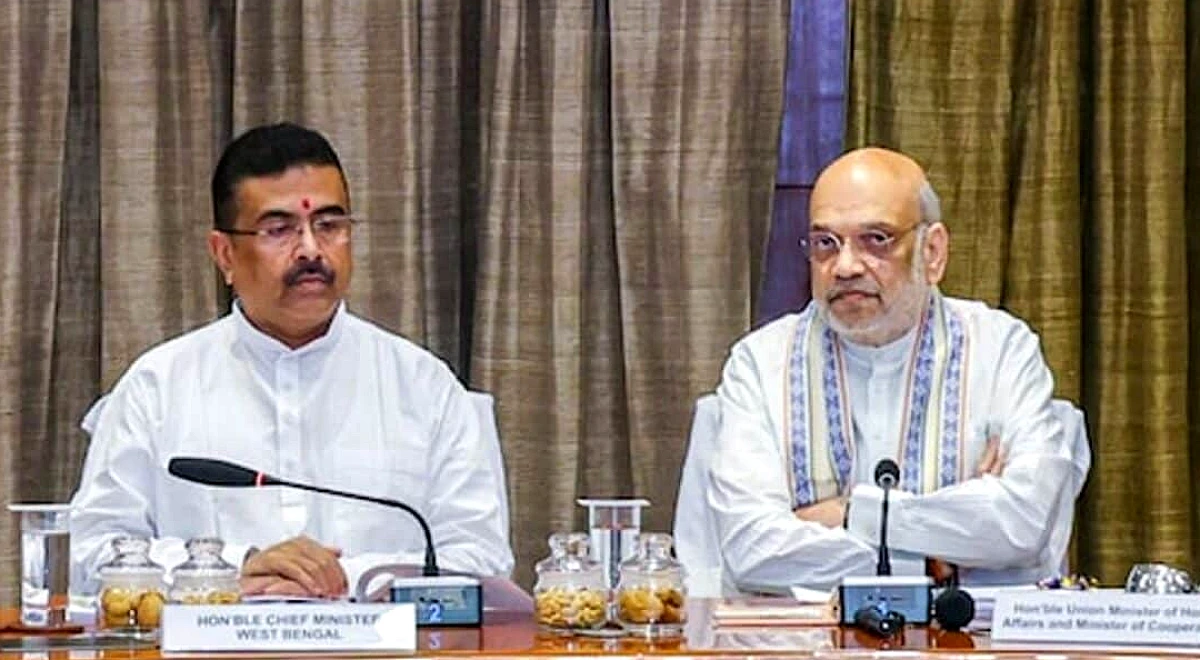
Union Home Minister Amit Shah on Saturday vowed to find a “Permanent Political Solution" (PPS) for the long-standing Gorkha identity and administrative issues in West Bengal’s Darjeeling hills.
During a critical tripartite meeting held at Sukna in the Darjeeling foothills, Shah emphasised that a final resolution will be delivered strictly under the umbrella of the Constitution of India without dividing the state.
The Ministry of Home Affairs, Government of India, has constituted a high-level Committee under the chairmanship of former Deputy National Security Advisor and Interlocutor Shri Pankaj Kumar Singh to prepare the comprehensive framework for a Permanent Political Solution with… pic.twitter.com/xoA7c9lHv3— Amit Shah (@AmitShah) August 22, 2026
The meeting marked a rare consensus checkpoint, bringing together key political figures from both the state and regional leadership such as West Bengal Chief Minister Suvendu Adhikari and local leaders like Darjeeling MP Raju Bista and Rajya Sabha MP Harsh Vardhan Shringla. It also saw the participation of prominent regional representatives including Gorkha Janmukti Morcha (GJM) chief Bimal Gurung and Gorkha National Liberation Front (GNLF) president Mann Ghising.
The West Bengal hills issue primarily revolves around the decades-old socio-political and identity struggle of the ethnic Gorkha population living in the northern hill districts of West Bengal (such as Darjeeling, Kalimpong, and Kurseong). The core of the conflict stems from their demand for administrative autonomy or a completely separate state named Gorkhaland.
The hill communities argue that they are ethnically, culturally, and linguistically distinct from the plains-centric population of West Bengal and have faced systematic political and economic neglect.
The Demand for Gorkhaland: The agitation for statehood dates back decades, peaking in violent conflicts during the 1980s and structural protests in 2007 and 2017. Proponents argue a separate state is necessary to preserve Gorkha identity and constitutional recognition.
Failure of Interim Bodies: To quell the demands, previous governments created semi-autonomous administrative bodies—first the Darjeeling Gorkha Hill Council (DGHC) in 1988, followed by the Gorkhaland Territorial Administration (GTA) in 2011. Local leaders heavily criticize these bodies as powerless, financially dependent on Kolkata, and plagued by corruption.
Socio-Economic Grievances: The region relies heavily on tea estates, timber, and tourism. The hill population frequently protests against stagnant worker wages, closures of historic tea gardens, lack of land rights, and the perceived imposition of the Bengali language over Nepali.
Scheduled Tribe (ST) Status: A major sub-demand includes granting Scheduled Tribe status to 11 left-out Gorkha sub-communities to ensure reservation and constitutional protection.
The Union Home Minister, Amit Shah, has vowed to find a "Permanent Political Solution" for the Darjeeling Hills issue, which includes the Gorkhaland demand, within the constitutional framework and without dividing the state. A new committee, led by former IPS officer Pankaj Singh, has been formed to work towards this solution and will submit its report to the Centre.
The specific autonomy the Darjeeling hills will receive is not yet confirmed, as a high-level committee has been formed to prepare a comprehensive framework for a "Permanent Political Solution" (PPS). This solution will be delivered strictly under the Constitution of India and without dividing the state.
The permanent political solution for the Darjeeling Hills issue aims to address long-standing Gorkha identity and administrative concerns within the Indian Constitution, without dividing the state. It includes financial assistance for infrastructure and development, recognition of tribal status for 11 communities, constitutional protections, and socio-economic restoration.
Comments ()
Be the first to share your perspective on this story!