


Got Question about the News?
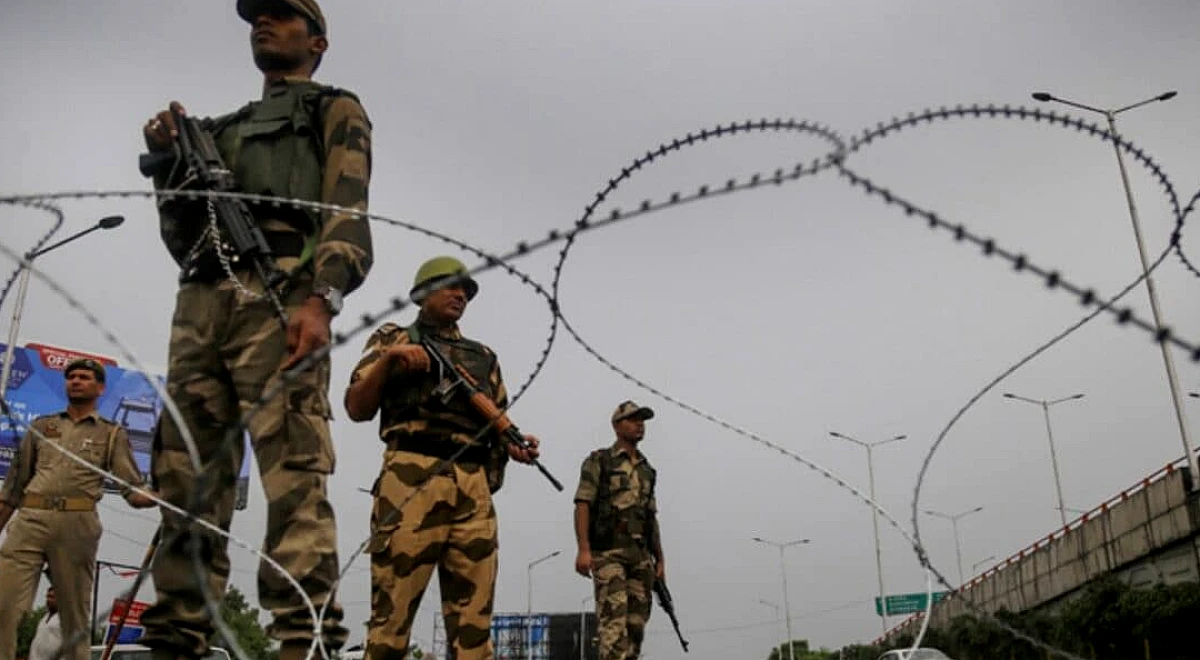
The Armed Forces Tribunal (AFT) has upheld the “severe displeasure" censure awarded to former Rashtriya Rifles sector commander Brigadier Padmasambhava Acharya over the December 2023 custodial deaths of three civilians in Jammu and Kashmir’s Poonch district.
Dismissing Acharya’s plea, the tribunal ruled that even intense emotional provocation following the loss of soldiers during counter-insurgency operations cannot override military discipline, constitutional mandates and human-rights safeguards.
The AFT stressed that excessive or unnecessary force cannot be used against citizens and that the powers available under the Armed Forces (Jammu and Kashmir) Special Powers Act (AFSPA), 1990, do not permit arbitrary use of force.
“While dealing with insurgents, the security forces must not violate human rights. Unnecessary force should not be used nor should there be a breakdown of the rule of law. This is necessary for democracy to survive," the tribunal said in its order passed recently.
The tribunal held that excessive force had been used in violation of law and linked the failure to prevent it to the command responsibility of the sector commander.
“Excessive force was used in violation of the law. It was, thus, a failure of command and control function. Failure to stop use of excessive force and failure to pass clear directions were the direct fallout thereof," the AFT said.
The bench also emphasised that Army guidelines prohibiting physical force and third-degree methods during interrogation are legally binding and must be strictly followed.
Citing Supreme Court judgments, it said duties involving internal security require a distinct approach from conventional warfare.
The tribunal observed that Brigadier Acharya, as sector commander, had an important responsibility for the discipline and training of troops under his command.
The AFT acknowledged the difficult circumstances faced by troops after the December 2023 ambush, in which four soldiers were killed, and the bodies of two were mutilated.
“The troops involved in follow-up operations face a dilemma. Having lost their brothers in arms and that too brutally, makes their blood boil and development of emotions of revenge is quite natural," the bench said.
However, it added that rigorous military training requires troops to exercise restraint and follow plans to trace those responsible.
“Even in war, the Indian soldier is known for his discipline, and adherence to the Geneva Conventions is the rule," the tribunal said.
“In the conflict between human emotions and requirements of discipline, which is in large measure based on the law declared by the Supreme Court, human emotions must yield," it added.
The case stems from an operation launched on December 21, 2023, after a military convoy was ambushed near Dera Ki Gali (DKG) in Poonch.
Four soldiers were killed in the attack, with the bodies of two of them mutilated.
During subsequent search operations, sub-units rounded up local civilian suspects for questioning in an effort to gather actionable intelligence.
Three civilian suspects later succumbed to their injuries during interrogation at the Company Operating Base in Mastan Dhara.
A Court of Inquiry convened by HQ 16 Corps subsequently led to administrative action against Brigadier Acharya, who was then commander of 13 Sector Rashtriya Rifles.
The action related to alleged failures to exercise proper command and control, improper handling of civilians and failure to prevent excessive force.
Acharya had challenged the two-year censure issued by the General Officer Commanding of 16 Corps.
He argued that senior commanders, including the corps commander and the GOC of Counter Insurgency Force “Romeo", were present at the DKG control room during the operations and should therefore share responsibility.
He also argued that the corps commander had acted as a judge in his own cause.
The tribunal rejected these arguments, clarifying that direct command and control over ground operations rests with the commanding officer and sector commander.
Higher commanders visiting forward control rooms for situational awareness, it said, do not exercise micro-level executive control over sub-unit tactical interrogations.
The AFT also rejected challenges to the Court of Inquiry, holding that Acharya had failed to establish any violation of the applicable Army rules or regulations.
On the allegation that the show-cause notice was vague, the tribunal said it had specifically identified the alleged failures involving command and control, prevention of excessive force and issuance of clear directions.
The tribunal also examined the protections available under AFSPA.
It rejected the argument that protection from prosecution under the law prevented administrative action against the officer.
According to the AFT, Section 7 of AFSPA protects persons acting in good faith from prosecution, suits or other legal proceedings without prior sanction from the central government. However, it does not bar departmental action.
The tribunal therefore upheld the disciplinary action against Acharya.
While dismissing Acharya’s plea, the tribunal provided relief on the question of the disciplinary record.
It directed authorities not to maintain the record of the punishment on his administrative file, treating the decision as an exception limited strictly to the facts of the case.
The bench referred to a Defence Ministry policy dated October 30, 2023.
Under the policy, a censure awarded to an officer ordinarily remains part of the administrative record for 10 years and is shared with selection and promotion boards. However, a “Severe Displeasure" issued by a corps commander remains operative for a maximum of two years.
The censure against Brigadier Acharya was awarded on July 8, 2024.
The tribunal noted that its two-year period had been completed and the punishment had ceased to be operative.
It therefore ordered that the record should not be retained, while making clear that the direction was confined to the specific circumstances of the case.
“This is a direction based on the facts of the instant case only and is not to be treated as a precedent or an exposition of the law," the AFT bench said.
The tribunal’s ruling thus upheld the disciplinary action while simultaneously directing that the expired “Severe Displeasure" not be retained on Acharya’s administrative file.
The Armed Forces Tribunal's ruling, which upheld a censure against a Brigadier for custodial deaths, stressed that AFSPA powers do not permit arbitrary force and that excessive force cannot be used against citizens. This indicates a judicial interpretation that could influence how AFSPA is implemented, by reinforcing human rights safeguards and military discipline.
The Armed Forces Tribunal's decision to uphold the censure against Brigadier Padmasambhava Acharya reinforces that military discipline, constitutional mandates, and human rights safeguards must be maintained even under intense emotional provocation during military interrogations.


Comments ()
Be the first to share your perspective on this story!