


Got Question about the News?
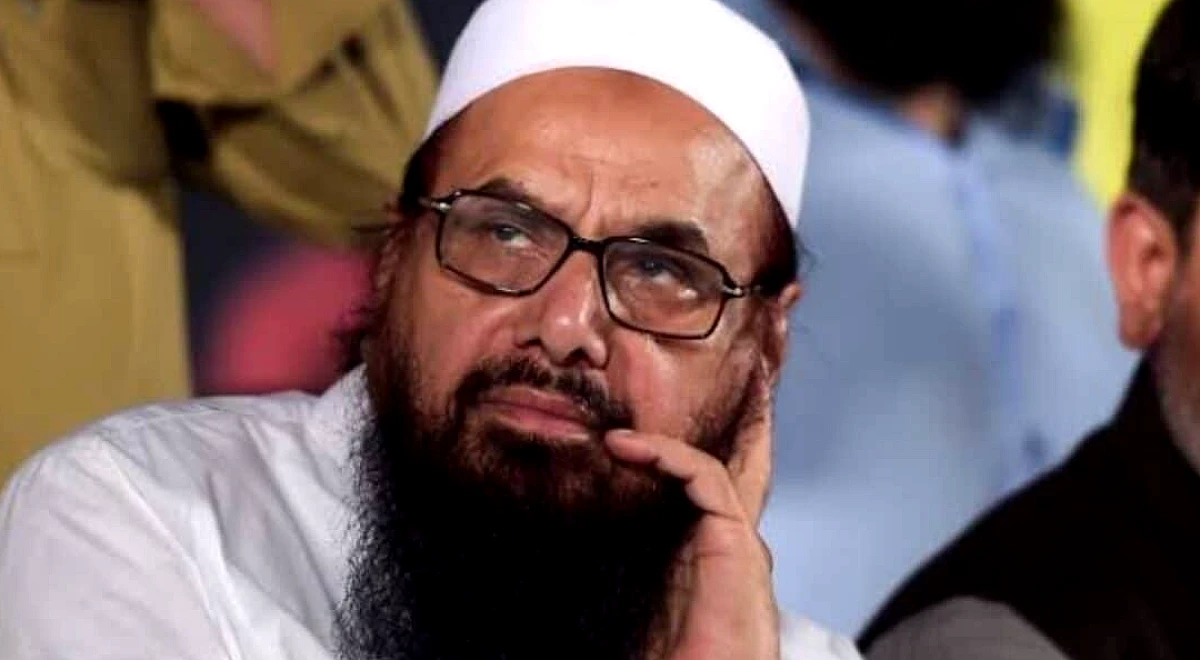
India is now taking its pursuit of anti-India terror operatives beyond dossiers and diplomatic exchanges, with the legal process against Lashkar-e-Taiba (LeT) founder Hafiz Saeed emerging as a key test of the country’s new criminal law framework.
Top government sources told CNN- that the move to make Saeed a proclaimed offender and potentially proceed against him in absentia could mark a fundamental shift in how India deals with accused terrorists who remain safely across the border and refuse to appear before Indian courts.
Sources described the proceedings as the first real test of Section 356 of the Bharatiya Nagarik Suraksha Sanhita (BNSS), 2023, in this context, with the Pahalgam chargesheet being used as a significant test case for the new provision.
The sources said that, for the first time, the legal framework allows an Indian court to fully try and convict an accused who is deliberately remaining outside the country and refusing to participate in the proceedings, subject to the prescribed legal process.
According to government sources, the first step in the process is obtaining non-bailable warrants from the special court.
Once such warrants are issued and the accused ignores them, the court can move towards formally declaring the person a proclaimed offender.
This is significant in Saeed’s case because he remains outside India.
The sources said the process is designed to create a formal and documented judicial trail rather than another diplomatic exchange that can simply be dismissed.
“Suddenly there’s a formal, black and white paper trail that can’t be ignored as just another dossier," the sources said.
They added that India is “deliberately building an airtight case file" in which every warrant, summons, letter and instance of non-cooperation will be carefully recorded.
The government sources said that once the court issues the necessary orders, the summons and other communications will travel through the formal government channels.
According to the sources, the communication will move from the court to the Ministry of Home Affairs, then to the Ministry of External Affairs and subsequently to the Indian High Commission in Islamabad before reaching Pakistan’s Foreign Ministry.
The objective, sources said, is to ensure that there is a documented record of every step taken by India and every instance in which the accused or Pakistan fails to cooperate.
The sources said the eventual goal is a conviction that would be difficult for international human-rights bodies to challenge, because the case would rest on a complete judicial process and documented evidence rather than intelligence inputs alone.
For years, India has relied heavily on dossiers and intelligence inputs to put forward its case against terror operatives based in Pakistan. According to the sources, Pakistan has often dismissed such material as political propaganda.
The current approach is intended to change that dynamic.
Saeed, according to the CNN- sources, is being pursued both as an individual and in connection with his alleged leadership role in Lashkar-e-Taiba and its proxy, The Resistance Front (TRF).
A conviction would, according to the sources, transform the nature of the evidence India can present internationally, from intelligence assessments to a formal court judgment.
The sources said India could then approach the UN Security Council Sanctions Committee and friendly countries with a judicial verdict while seeking action against Saeed and groups such as TRF.
The government sources said a court conviction could strengthen India’s case for measures such as travel restrictions, asset freezes and financial sanctions against Saeed and organisations linked to him.
They also pointed to the importance of the record created by ignored summons, warrants and Letters Rogatory.
According to the sources, that record could subsequently be placed before the Financial Action Task Force (FATF) and other international watchdogs, making it harder for Islamabad to argue that more evidence is required.
In the government’s assessment, every ignored legal communication would become part of a permanent record of non-cooperation.
The sources also framed the legal push against Saeed and Lashkar-e-Taiba in the context of repeated terror attacks targeting ordinary people in India.
They pointed to the 26/11 Mumbai terror attacks and the Pahalgam terror attack, arguing that the pattern involves planning from Pakistan, attacks on Indian soil and subsequent denial.
The sources said that as long as the leadership of such groups remains beyond India’s reach, the organisations can continue operating through new names and proxies.
“Turning court process into real convictions, international pressure and financial isolation is the only way to stop Lashkar terror factory which is attacking India again and again," the sources said.
Separately, reported that the Mumbai Police has approached the Union Home Ministry to serve court proclamation orders through Interpol against six absconding accused in the 26/11 case, including Hafiz Saeed and Zaki-ur-Rehman Lakhvi.
The police, represented by special public prosecutor Ujjwal Nikam, submitted an interim report on Friday regarding the proclamation orders issued in July.
“We have written to the Ministry of Home Affairs (MHA) for taking necessary steps in serving the proclamation order, through Interpol, against the accused residing in Pakistan," Nikam told the special court.
He said the MHA had acknowledged the request on August 3 and sought time to file its status.
reported that the other accused named in the proclamation orders are Sajid Mir, Abu Alqama, Asim alias Abu Qahafa and Major Abdur Rehman Pasha, all Pakistani nationals.
The 26/11 attacks killed 166 people, including six Americans, after 10 Pakistani terrorists carried out a more than 60-hour siege across Mumbai in November 2008.
The new law could impact other terror operatives abroad by allowing India to pursue legal proceedings against them in absentia, moving beyond traditional dossiers to court-backed verdicts. This approach aims to address accused terrorists who remain outside India and refuse to appear before Indian courts.
If Hafiz Saeed is convicted in absentia, India could present formal legal documents alleging that Pakistan is harbouring a convicted terrorist on its territory. This could strengthen India's diplomatic pressure on Pakistan regarding the alleged sheltering of those accused in the 26/11 Mumbai attacks.



Comments ()
Be the first to share your perspective on this story!