


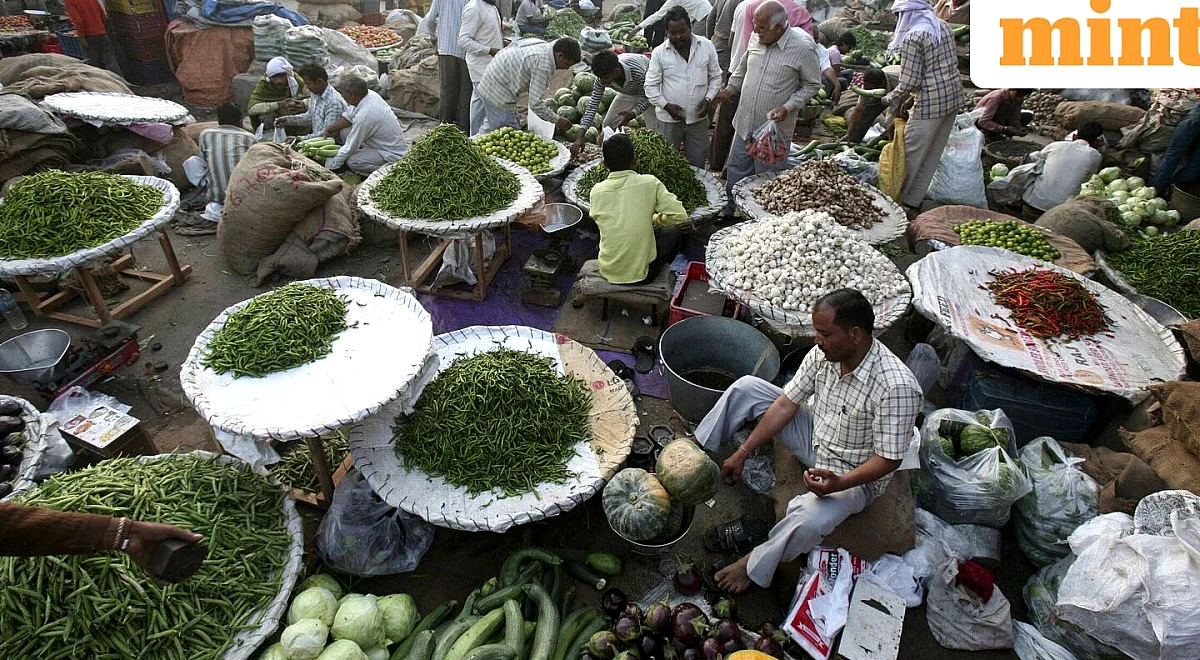
The Ministry of Food Processing Industries has sought a five-year extension for its flagship ₹10,000 crore Pradhan Mantri Formalization of Micro Food Processing Enterprises (PMFME) scheme. Mint explains why the government wants to extend the scheme, launched in FY21, and how more financing could help micro enterprises.
Launched on 29 June 2020 as a centrally sponsored scheme, PMFME was allocated ₹10,000 crore for FY2020-25. The scheme was later extended through FY2025-26 and subsequently continued until 30 September 2026.
It provides financial, technical and business assistance to entrepreneurs for setting up new units or upgrading existing ones. The expenditure under the scheme is shared between the Centre and states in a 60:40 ratio, while the ratio is 90:10 for northeastern and Himalayan states. For Union territories with legislatures, the Centre and UT share costs in a 60:40 ratio, while the Centre bears 100% of the expenditure for other UTs.
The scheme provides a 35% credit-linked capital subsidy for eligible micro food-processing enterprises, with subsidy support available for projects costing up to ₹30 lakh.
The scheme is aimed at helping small and informal food-processing businesses become formal, improve their operations and gain access to institutional finance.
Formalisation can help small businesses move from informal operations to organised business structures. For micro food-processing units, it can also support investments in better equipment, packaging, quality standards and technology.
This can improve productivity and reduce post-harvest losses. Formal businesses may also find it easier to access organised retailers and e-commerce platforms, expanding their market reach.
For the government, greater formalisation improves visibility of the sector, enabling better targeting of financial assistance and infrastructure support.
This comes against the backdrop of the agriculture and allied sectors contributing around 16% of India’s gross domestic product (GDP), with around 46% of India's workforce dependent on agriculture.
As on 30 June, 200,421 micro food enterprises have been approved with credit-linked subsidy of ₹5,954.57 crore and private investment of about ₹14,480.24 crore across the country.
More than 40% of the beneficiaries are women entrepreneurs, highlighting the scheme’s role in promoting inclusive growth and rural livelihoods.
PMFME has emerged as a significant initiative in strengthening India’s food-processing sector, particularly benefiting micro and small food entrepreneurs across rural and semi-urban areas.
The scheme is intended to strengthen India’s food-processing ecosystem by encouraging local value addition, improving the competitiveness of small enterprises and reducing post-harvest losses. It can also help create jobs and increase farmers’ market opportunities.
Bihar has emerged as the top-performing state in the implementation of the scheme, with 33,123 beneficiaries, according to government data.
Maharashtra ranked second with 31,955 beneficiaries, followed by Uttar Pradesh with 27,681. Tamil Nadu and Madhya Pradesh were next, with 19,894 and 16,475 beneficiaries, respectively.
Karnataka recorded 10,672 beneficiaries, while Andhra Pradesh and Kerala had 10,342 and 10,267, respectively.
Telangana and Assam rounded out the top 10, with 8,004 and 6,923 beneficiaries.
The strong performance of Bihar highlights the growing uptake of the scheme among micro food-processing units in the state.
The proposed extension aligns with the government’s broader strategy to promote food processing as a key growth driver in agriculture.
A further five-year extension would provide policy continuity and allow more micro enterprises to undertake investments with greater certainty. It would also give the government more time to build on the scheme’s implementation experience and address gaps in formalisation, technology adoption and access to finance.
The move also assumes significance because only 17% of perishable food produce is processed in India, highlighting the significant scope for expanding food-processing capacity and reducing post-harvest losses.





Comments ()
Be the first to share your perspective on this story!