


Got Question about the News?
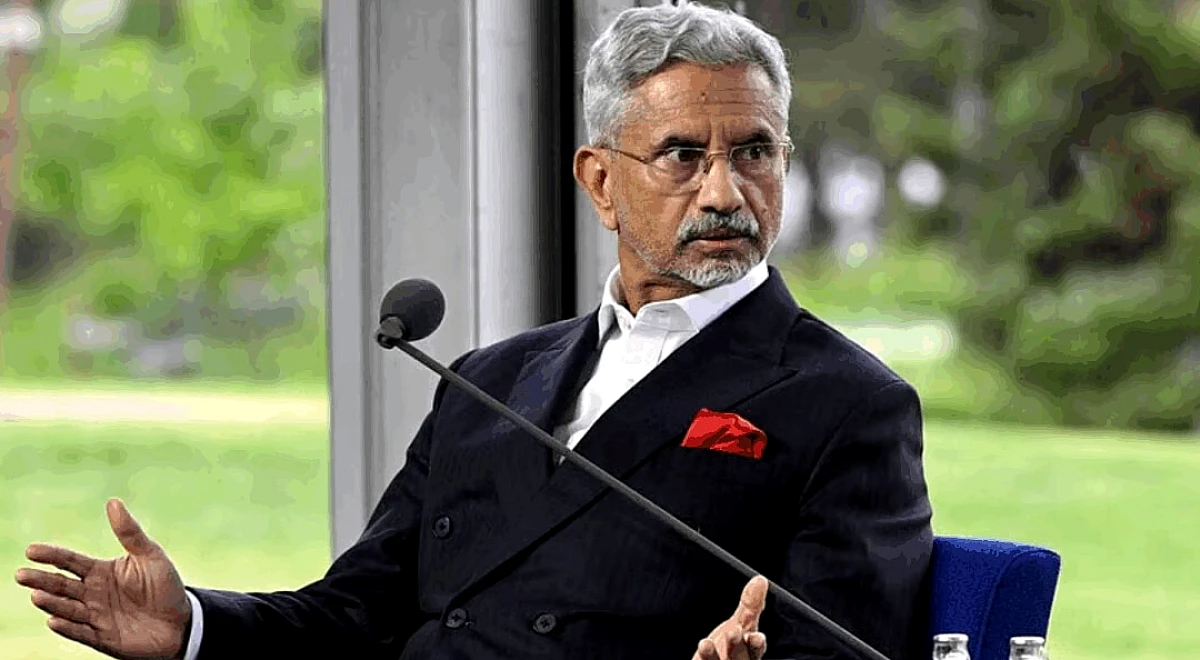
External Affairs Minister S Jaishankar said India’s relations with its neighbours must be based on mutual interest, as he spoke about ties with Bangladesh, Pakistan and China amid continuing regional tensions.
Speaking at the Economic Times World Leaders Forum, Jaishankar said India did not expect neighbouring countries to always act in New Delhi’s interest. He said relationships work when both sides are able to find common ground.
Jaishankar was responding to a question on Bangladesh’s demand for the extradition of former prime minister Sheikh Hasina, amid reports that Dhaka has linked Prime Minister Tarique Rahman’s possible visit to New Delhi to the issue.
He declined to discuss the details of the talks between India and Bangladesh but said bilateral ties had to pass the “test of mutual interest".
“What I can tell you is for any relationship to work, it has to meet the test of mutual interest. It has to work for them, it has to work for us," Jaishankar said. He added that India was realistic about its neighbourhood and did not expect other countries to do only what was in its interest.
“There has to be a fair degree, a reasonable degree of my recognising and respecting what is their interest, just as I expect them also to do so," he said.
Jaishankar said that once the two sides found a “landing point" or “common ground", relations could move smoothly. He said the principle of mutuality applied to India’s relations with all its neighbours.
India has invited Rahman for a bilateral visit and also to attend the upcoming BRICS Summit in his capacity as chair of the Bimstec grouping.
Plans for a visit next week fell through at the last minute. India and Bangladesh are now in touch to arrange the visit later this month or in early September, people familiar with the matter said.
Rahman’s visit is seen as important for efforts to reset India-Bangladesh ties, which have faced unprecedented strains. Hasina’s presence in India has remained a key irritant in the relationship.
On Pakistan, Jaishankar said the Indian government could not ignore public opinion, particularly over terrorism. He said people in India viewed Pakistan as a country that “does not empathise with us, does not understand our point of view" on terrorism.
Asked about improving Pakistan-US relations and their possible impact on India, Jaishankar said the US and Pakistan had a long history of relations.
But he singled out Pakistan for its use of terrorism against India.
“Pakistan is unique not because it’s a neighbour of India… It is unique because in this day and age, there is no other country which uses terrorism so systematically and in such a sustained manner to attack and pressure another neighbour," he said.
Jaishankar also discussed the Makkah Joint Defence Agreement signed by Pakistan, Saudi Arabia and Türkiye. He questioned what the agreement had achieved in response to the “live military situations" faced by its signatories. At the same time, he said India would take the pact into account while assessing its security environment.
“In my calculus, everything counts, everything will have a weight…and sometimes things need to play out," he said.
He added that everything done by a player who was “not well disposed towards me" would form part of India’s calculations.
On China, Jaishankar reiterated that the situation along the border would determine the broader relationship between the two countries.
He said India and China were both large economies, part of supply chains, markets for each other and engaged in economic interaction. Both also had a political and strategic interest in maintaining a stable relationship.
Jaishankar said the two countries had gone through a particularly difficult period between the summer of 2020 and autumn of 2024, which he attributed primarily to the situation in the border areas.
“At the end of the day, peace and tranquillity in the border areas is a prerequisite for good relations," he said.
He also acknowledged reports of Indian businesspeople facing difficulties in obtaining Chinese visas and said the matter had been raised with Beijing.
Jaishankar said India needed to strengthen its capabilities while continuing to engage with the entire world, including China.
“The world is competitive, we must build up our strengths," he said, adding that India must deal with China confidently and “stand our ground", as it had done on the border.
Comments ()
Be the first to share your perspective on this story!