


Got Question about the News?
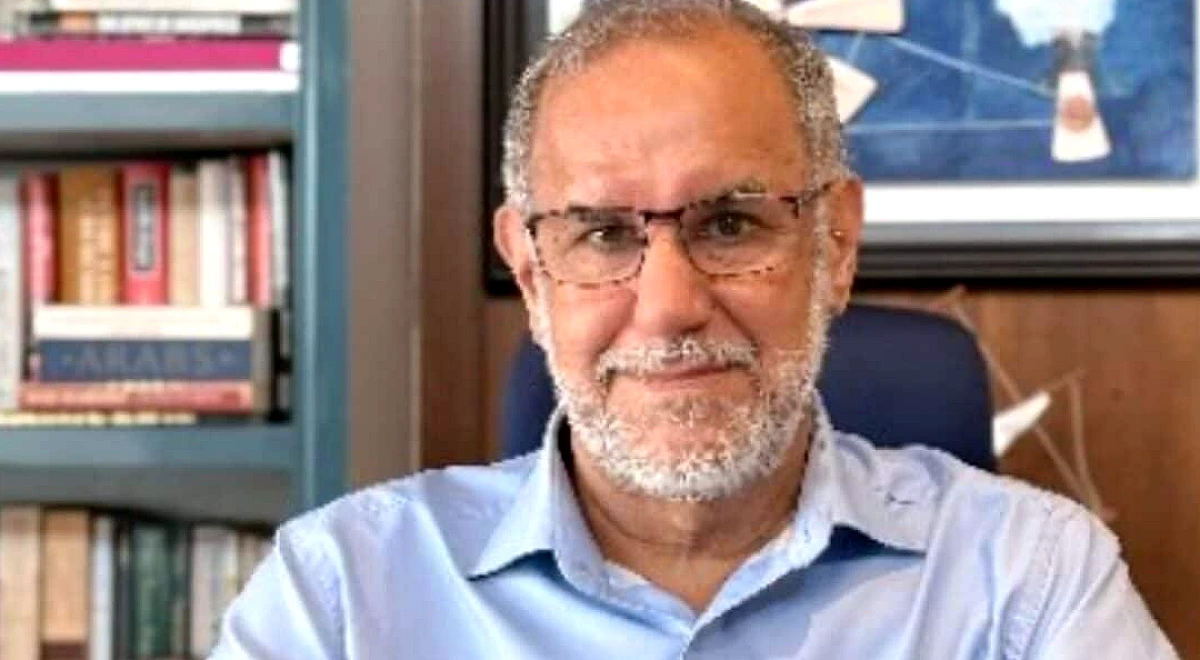
Former Indian diplomat Navdeep Suri has spoken about an unexpected hurdle he faced while participating in the ongoing electoral roll revision in Punjab, saying he was asked to provide additional proof of his Indian citizenship after discrepancies were flagged in his 2003 records.
Suri, who represented India in Egypt, the UAE and Australia during a diplomatic career that lasted from 1983 to 2019, said he had completed the verification process with the Booth Level Officer (BLO). He submitted his Voter ID and Aadhaar card and was initially told that there was no issue with his documents.
However, Suri said he was later informed by a volunteer that some of his information did not correspond with the records being checked as part of the Special Intensive Revision (SIR).
“Sharing my experience with #SIR in Punjab. Went to BLO, submitted Voter ID and Aadhaar card, was assured that everything is in order. Got a message today from a volunteer saying some details don’t match with SIR in 2003!" Suri wrote on X.
The former diplomat said he was subsequently asked to return with documents that could establish his Indian citizenship. Since he was not in the country in 2003, he said officials asked him to produce his passport.
Suri questioned what such verification requirements could mean for ordinary voters who may not have access to extensive documentary records.
“If I have trouble establishing my citizenship after representing India in three countries, what’s the fate of the common citizen?" he said.
There has been no official response from the Election Commission of India, the Punjab government or the Centre specifically addressing Suri’s claim.
The Election Commission has begun the next stage of the Special Intensive Revision (SIR) of electoral rolls in Punjab. The draft rolls covering all 117 Assembly constituencies were published last week.
Voters can submit claims and objections from August 13 to September 12, 2026. Authorities will then examine the submissions and dispose of claims and objections by October 8. The revised final electoral rolls are scheduled to be released on October 12.
The first stage involved door-to-door verification between June 25 and August 3. During this exercise, forms belonging to nearly 1.94 crore voters were collected and digitised out of Punjab’s total electorate of around 2.14 crore.
Officials classified more than 20 lakh voters, equivalent to 9.63% of the electorate, under the ASDD category — meaning absent, shifted, dead or duplicate.
Suri’s experience comes amid questions raised by other political figures over the revision exercise. AAP leader Somnath Bharti had earlier said that he could not locate his name in the 2002 electoral roll, despite having graduated from IIT Delhi in 1997 and subsequently studying law in Delhi.
Bharti had also raised concerns over reports suggesting that 20-30 lakh names could be removed during the revision process.
The SIR exercise is intended to update and verify Punjab’s electoral rolls, with the final list expected to be published in October
Common citizens whose names are missing from the electoral roll can apply for reconsideration both online and offline. Online applications can be submitted through the Election Commission's website by clicking on the 'Submit Appeals for Individuals' tab. However, only those whose names were on the list under consideration can apply through this method.
The Special Intensive Revision (SIR) process could affect future election results, as large numbers of names have been removed from electoral rolls in other regions. In West Bengal, approximately 90 lakh voters were deleted before assembly elections, and in Bihar, over 60 lakh names were removed. The numbers involved in these revisions are comparable to recent electoral margins.
Comments ()
Be the first to share your perspective on this story!