


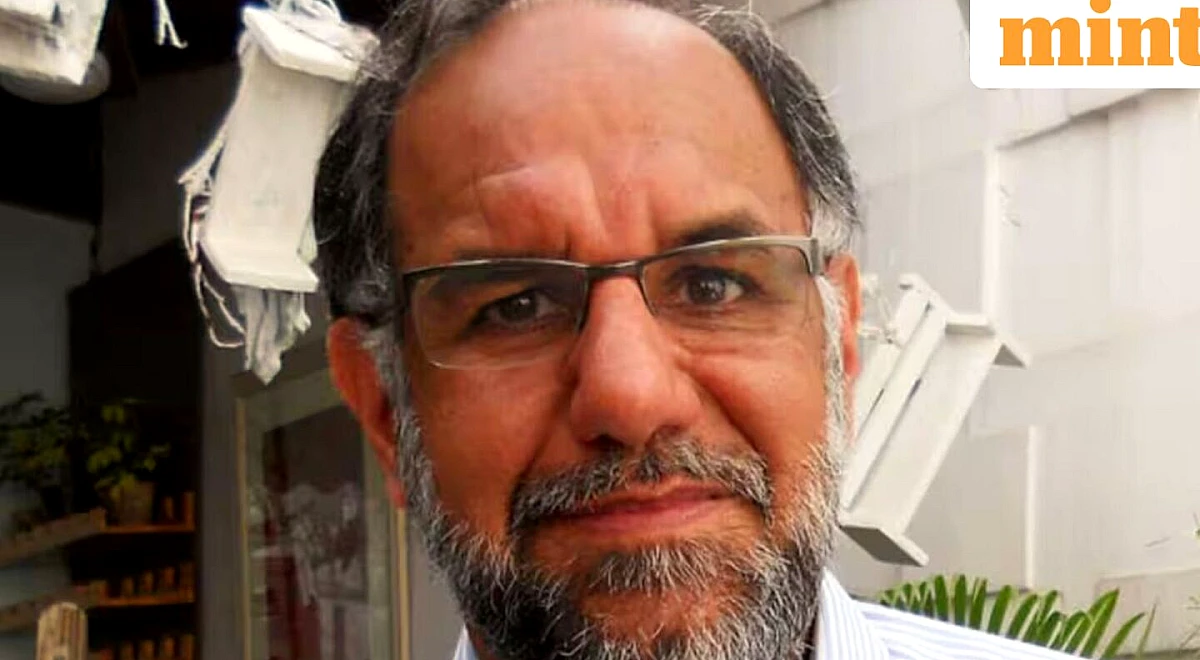
Former diplomat Navdeep Suri has raised questions over the ongoing Special Intensive Revision (SIR) of electoral rolls in Punjab, saying he was asked to provide proof of citizenship despite having served India as a diplomat in three nations.
Suri shared his experience on X on Sunday, saying he initially submitted his Voter ID and Aadhaar card to the booth-level officer (BLO). He said he was subsequently informed that some of his details did not match the electoral records used for the 2003 revision.
"Sharing my experience with #SIR in Punjab. Went to BLO, submitted Voter ID and Aadhaar card, was assured that everything is in order. Got a message today from a volunteer saying some details don't match with SIR in 2003!" Suri posted.
He said he was later asked to collect a notice and submit additional documents establishing his citizenship. According to Suri, when he pointed out that he was not in India in 2003, officials asked him to produce his passport.
"Spoke with BLO, was told that I should come and collect the notice. And then come again with unspecified documents that show I am an Indian citizen. Replied that I was not in India in 2003, so they've asked for passport as proof," he said.
Suri said he had other documents available to establish his identity and citizenship, but questioned how ordinary voters without similar documentation might navigate the process.
"I happen to have documents other than voter ID and Aadhaar card. But can't help asking: If I have trouble establishing my citizenship after representing India in three countries, what’s the fate of the common citizen?" he said. "Ease of Living, I presume!" Suri added.
Suri has served as India's High Commissioner to Australia and Ambassador to the United Arab Emirates and Egypt.
The Draft Electoral Roll 2026 for all 117 assembly constituencies in Punjab has been published under the SIR 2026, Chief Electoral Officer Anindita Mitra said, reported.
This marks the start of the next phase of the revision process. Voters can submit claims and objections between August 13 and September 12. The subsequent notice and disposal process will continue until October 8, with the final electoral rolls scheduled to be published on October 12.
During the enumeration phase, officials collected and digitised forms for nearly 1.94 crore of Punjab's 2.14 crore electors.
The remaining more than 20 lakh electors, or 9.63% of the total electorate, were classified under the absent, shifted, dead or duplicate (ASDD) category.
The house-to-house enumeration exercise was conducted from June 25 to August 3 as part of efforts to update and clean up the state's electoral rolls.
Prabhakar Jha is a journalist and digital news editor with nearly a decade of experience in online media, specialising in breaking news, politics, national affairs. Having built his career across fast-paced digital newsrooms, he has developed a reputation for delivering accurate, timely, and reader-friendly stories while leading editorial teams during high-pressure news cycles. In 2026, he joined LiveMint as a Digital Content Producer.
A postgraduate in History from the University of Delhi, Prabhakar combines strong editorial judgment with a keen interest in public policy, governance, economics, and global affairs. Before joining LiveMint, he worked with leading digital publications, including News9Live and The , where he handled breaking news, copy editing, headline writing, live coverage, and newsroom coordination.
Beyond the newsroom, Prabhakar is passionate about long-form writing and storytelling. He has a particular interest in global affairs. An avid reader with a love for literary fiction, he also enjoys blogging, poetry, and working on creative writing projects.
Stay updated with the latest Trending, India, World and US news.
Download the Mint app and read premium stories
Log in to our website to save your bookmarks. It'll just take a moment.
Oops! Looks like you have exceeded the limit to bookmark the image. Remove some to bookmark this image.
Comments ()
Be the first to share your perspective on this story!