


Important topics and their relevance in UPSC CSE exam for August 20, 2026. If you missed the August 19, 2026 UPSC CSE exam key from the Indian Express, read it here
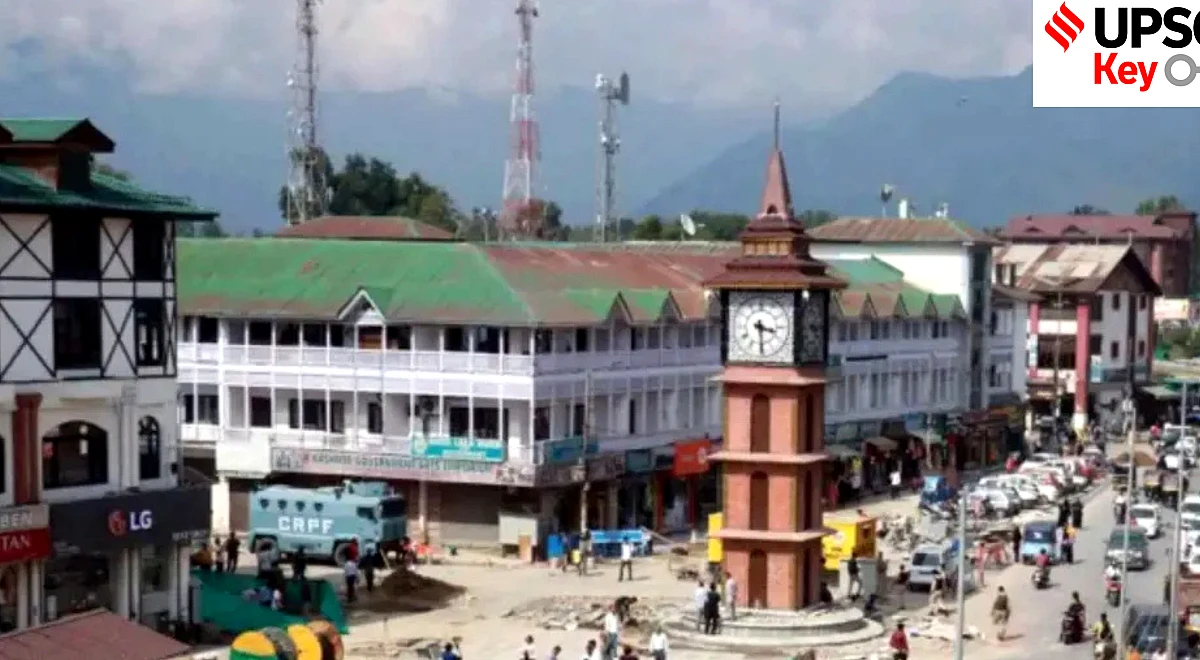
J&K important part of India, will relook at travel warnings: US envoy in Srinagar
Preliminary Examination: Current events of national and international importance.
Mains Examination: General Studies II: Functions and responsibilities of the Union and the States, issues and challenges pertaining to the federal structure
What’s the ongoing story: In a strong endorsement of New Delhi’s long-standing position on Jammu & Kashmir, US Ambassador Sergio Gor, who was in Srinagar Wednesday on his maiden visit to the Valley, described J&K as “an important part of India” and signalled that Washington would review the situation in the Union Territory to downgrade and ease travel warnings for US citizens.
• What exactly Sergio Gor said in Srinagar?
• Jammu and Kashmir-Know the historical evolution of the Kashmir issue from 1947 to the present.
• Article 370-Why it was repealed?
• What exactly is the US’s “well-documented position” on Jammu & Kashmir?
• How the question of plebiscite in Jammu and Kashmir came up?
• Kashmir issue at the UN-What was the outcome?
• Former PM Nehru’s decision to take the Kashmir issue to the United Nations can be viewed either as an act of statesmanship or as a failure of strategic prudence-What are all the ethical dimensions of the decision?
• Historical decisions must be judged in the context of the circumstances in which they were taken—What is your take on this statement?
• What do you understand by the term Bilateralisation and Internationalisation?
• Pakistan consistently seeks internationalisation and external attention regarding Jammu and Kashmir-why?
• How have the Shimla Agreement and Lahore Declaration shaped India’s approach towards the Kashmir issue?
• Gor met Chief Minister Omar Abdullah at his Gupkar Road residence, marking the first standalone visit to the Valley by a serving US Ambassador since the abrogation of Article 370 in August 2019. In January 2020, Kenneth Juster, the then Ambassador, had visited the Valley as part of a government-facilitated delegation of foreign envoys.
• Stating that he was “thrilled” to be in the Valley, Gor said, “This is an important part of India. I am here, visiting for the first time. It’s an incredibly beautiful place.” He said he had “a very warm, very cordial” meeting with the Chief Minister. “We have some follow-ups that we hope to take back to Washington and back to Delhi. We look forward to building this relationship.”
• The current US advisory on J&K, citing concerns over terrorism and unrest, urges its citizens not to travel to this area “except for visits to the eastern Ladakh region and its capital, Leh”.
• After the US Ambassador to India, Sergio Gor, on Wednesday (August 19) called Jammu and Kashmir “an important part of India”, Pakistan lodged a formal protest, summoning the US Charge d’ Affaires (top diplomat in absence of ambassador) in Islamabad to the Ministry of Foreign Affairs. This comes at a time Pakistan’s ties with the US have been unusually warm, with Islamabad cheering Donald Trump’s offers of mediating between the Asian neighbours and Pakistan mediating between the US and Iran.
• Gor echoing India’s right on Jammu and Kashmir is especially significant for two reasons. One, he is considered very close to Trump. Second, he is not just the US ambassador to India, but also the Special Envoy for South and Central Asian Affairs, in charge of overseeing US foreign policy with Afghanistan, Bangladesh, Bhutan, India, Kazakhstan, Kyrgyzstan, Maldives, Nepal, Pakistan, Sri Lanka, Tajikistan, Turkmenistan, and Uzbekistan. Since January 2025, the post of US ambassador to Pakistan has been vacant.
• When the 1947 war broke out between India and Pakistan over Kashmir, the US position had been to favour bilateral resolution but to support UN involvement if the need arose. When, on Governor-General Lord Louis Mountbatten’s advice, India did take the Kashmir issue to the United Nations, the US and UK were sympathetic to Pakistan, to India’s shock. The five members of the United Nations Commission for India and Pakistan were Czechoslovakia, Belgium and Colombia, Argentina, and the USA.
• During the 1962 India-China war, Washington provided military assistance to India. Kennedy also stopped Pakistan from opening another front against India. But in return for this, the US pushed New Delhi to negotiate with Pakistan over Kashmir. Six rounds of talks followed, without producing an agreement.
• The 1965 India-Pakistan war made it clear to the US that it could not maintain close strategic relationships with both countries while also trying to manage the Kashmir dispute. With the Vietnam war dominating US attention, it maintained a lower profile in South Asia.
• After the 1971 war, India and Pakistan signed the 1972 Simla Agreement, agreeing to resolve their differences bilaterally and to respect the Line of Control in Kashmir. The US became receptive to this approach.
• Once the Cold War ended, the US largely gave up public support for calls of plebiscite. While the first Bill Clinton administration criticised India’s human-rights record in Kashmir, after the Kargil war, Clinton blamed Pakistan for the aggression, and became more receptive to India’s arguments.
• A US Congress document of 2020, after India had abrogated Article 370, said, “The long-standing US position on Kashmir is that the territory’s status should be settled through negotiations between India and Pakistan while taking into consideration the wishes of the Kashmiri people.” Trump has repeated the mediation claim several times, even claiming he stopped the conflict after Operation Sindoor.
Other Important Articles Covering the same topic:
📍Post-Op Sindoor chill, message underlines Delhi stand, signal to Pak too
📍The Kashmir issue: why India went to the UN, and what happened after that
Previous year UPSC Prelims Question Covering similar theme: 1) Siachen Glacier is situated to the (UPSC CSE, 2020) (a) East of Aksai Chin (b) East of Leh (c) North of Gilgit (d) North of Nubra Valley
Previous year UPSC Mains Question Covering similar theme: 📍Terrorist activities and mutual distrust have clouded India – Pakistan relations. To what extent the use of soft power like sports and cultural exchanges could help generate goodwill between the two countries? Discuss with suitable examples.(UPSC, GS2, 2015) 📍To what extent is Article 370 of the Indian Constitution, bearing marginal note “Temporary provision with respect to the State of Jammu and Kashmir”, temporary? Discuss the future prospects of this provision in the context of Indian polity. (UPSC, GS2, 2016)
Institutionalise NTA reforms, says apex court, cites UPSC’s ‘vibrant’ example
Preliminary Examination: Current events of national and international importance.
Mains Examination: General Studies II: Government policies and interventions for development in various sectors and issues arising out of their design and implementation and Statutory, regulatory and various quasi-judicial bodies.
What’s the ongoing story: Underlining the need to “institutionalise” the National Testing Agency (NTA) and its reforms, the Supreme Court on Wednesday asked the Centre to file an affidavit, within three weeks, on the action taken to implement the recommendations of the earlier expert committee headed by former ISRO chairman K Radhakrishnan and the recent task force under Infosys co-founder Nandan Nilekani.
• What is the purpose of the National Testing Agency (NTA)?
• When was the NTA established?
• What are the recommendations of the earlier expert committee headed by former ISRO chairman K Radhakrishnan and the recent task force under Infosys co-founder Nandan Nilekani?
• Why there is the need to “institutionalise” the National Testing Agency (NTA)?
• What reforms are needed for the upgradation of NTA?
• Why UPSC is being used as a benchmark by the Supreme Court?
• Constitutional bodies in India like the UPSC is protected by specific safeguards ensuring their independence-what are those safeguards?
• Constitutional bodies, Statutory bodies and Executive bodies-compare
• Why is institutional integrity is of more significant than just preventing individual acts of malpractice?
• Citing the example of the Union Public Service Commission (UPSC), Justice P S Narasimha, presiding over a two-Judge bench, said the NTA, too, should become “a vibrant institution like that”.
• “Take the UPSC for example. Over a period of time, regularly, they are conducting exam after exam foolproof, which means they have institutional memory, institutional expertise. We want this institution (NTA), if it has to be entrusted with the obligation of conducting exams year after year, to ensure that it also upgrades itself and remains a vibrant institution like that,” he said.
• The bench, which included Justice Alok Aradhe, was hearing petitions seeking restructuring of the NTA in the wake of the NEET-UG paper leak.
• “We are informed that the Nandan Nilekani committee, which has been constituted to recommend end-to-end reforms focusing on leveraging advanced technology like AI and blockchain to strengthen security and integrity in examinations, has convened a meeting to consider various recommendations…We direct the Secretary to file an affidavit indicating in detail the steps that have been taken to implement the suggestions made by the Radhakrishnan committee, as reflected and nuanced by the Nandan Nilekani committee. This affidavit, containing all details and indicative timelines, shall be filed within a period of three weeks from today,” the court said in its order.
• Justice Narasimha said the Nilekani committee must “review the recommendations of the Radhakrishnan committee” and improve upon it if necessary.
• Solicitor General Tushar Mehta, who appeared for the Centre, said he had already spoken to the government on this.
• While the government set up the Radhakrishnan committee to overhaul the NTA and reform the exam process in 2024 following an earlier NEET-UG paper leak, the Nilekani task force on exam reforms was announced last month, following the protests led by the Cockroach Janta Party (CJP) over the latest leak.
• The K. Radhakrishnan Committee was constituted by the Ministry of Education in June 2024 following the NEET-UG paper leak controversy. Headed by former ISRO Chairman Dr. K. Radhakrishnan, the panel submitted its comprehensive report titled ‘Reformation of National Common Entrance Testing in India’ in October 2024, to revamp the National Testing Agency (NTA) and fortify public exam security. Recasting the NTA Governing Body into an empowered and fully accountable Apex Body chaired by a Director General holding a rank not lower than an Additional Secretary to the Government of India is one of the suggestion already given by the Committee.
Other Important Articles Covering the same topic:
📍Before Team Nilekani, ex-ISRO chief-led panel tried to fix exams: What its report said
Previous year UPSC Prelims Question Covering similar theme: 2) Which of the following provisions of the Constitution of India have a bearing on Education? (UPSC CSE, 2012) 1. Directive Principles of State Policy 2. Rural and Urban Local Bodies 3. Fifth Schedule 4. Sixth Schedule 5. Seventh Schedule Select the correct answer using the codes given below: (a) 1 and 2 only (b) 3, 4 and 5 only (c) 1, 2 and 5 only (d) 1, 2, 3, 4 and 5
Previous year UPSC Mains Question Covering similar theme: 📍What are the aims and objects of the recently passed and enforced, The Public Examination (Prevention of Unfair Means) Act, 2024? Whether University/State Education Board examinations are also covered under the Act? (UPSC, GS2, 2024)
Dignity in death: Debate over ‘humane’ execution
Preliminary Examination: Indian Polity and Governance
Mains Examination: General Studies II: Structure, organization and functioning of the Executive and the Judiciary—Ministries and Departments of the Government; pressure groups and formal/informal associations and their role in the Polity.
What’s the ongoing story: Can a method of execution devised in colonial India still satisfy the Constitution’s promise of dignity? The Supreme Court on Aug 18 said it can, at least on the material currently before it.
• Death Sentences in India—What exactly Annual Statistics Report every year says?
• What Article 39A of the Indian Constitution says?
• How Article 39A is different from Article 22 of the Indian Constitution?
• What else the annual statistics report ‘Death Sentences in India’ says on Capital Punishment?
• What is Death Sentences or Capital Punishment?
• How Countries retained Death Sentences or Capital Punishment?
• Know the important Supreme Court judgements related to Capital Punishments in detail
• What are the arguments for Capital Punishment in India?
• What are the arguments against Capital Punishment in India?
• “Capital Punishment is a form of retribution”- What do you understand by this statement?
• Objective of justice should be reformative and not retributive- What do you understand by this statement?
• What Law commission of India says about death penalty?
• A bench comprising Justices Vikram Nath and Sandeep Mehta upheld the constitutional validity of hanging as a mode of executing a death sentence, dismissing a PIL that argued the method is scientifically unreliable and violates the right to a dignified death under Article 21.
• The court held that the challenge ran into two hurdles – the 1983 precedent of Deena vs UOI in which a three-judge bench upheld hanging as a constitutional mode of execution, and the Parliament’s decision to retain hanging while enacting the BNSS.
• It said, “this constitutional protection does not cease to exist at the gallows, it must apply with equal emphasis to prisoners who are on death row.”
• Hanging is designed to work through a calculated “drop” based on the person’s height and weight, meant to cause a fracture-dislocation at the C2-C3 vertebrae and bring about near-instant unconsciousness.
• The Supreme Court in Deena vs UOI upheld the constitutional validity of hanging after examining medical evidence, expert opinion, and comparative execution methods. The court held that hanging, when properly administered, is a quick and certain method of execution and does not violate Article 21. It said that the process causes no greater pain than any other known method and avoids “barbarity, torture and degradation.”
• But the petitioners argued that both the scientific understanding and constitutional doctrine have evolved since. The petition sought a declaration that the provision prescribing hanging was unconstitutional and argued that Article 21 includes a right to die through a dignified procedure. They said the method is “accompanied by intense physical torture and pain,” and inherently unpredictable; too short a drop causes death by strangulation, too long a drop can decapitate.
• Reliance was placed on a 1992 study of the skeletal remains of 34 people hanged in England between 1882 and 1945. Fractures at C2-C3 were common, but the “hangman’s fracture” — assumed to cause near-instant death—showed up in only three of the 34 cases; six died of asphyxiation instead. They argued that this made hanging neither quick nor controllable and thus violated Article 21, as it isn’t reliably instantaneous, the run-up to execution causes severe psychological suffering, and its outcomes can’t be managed.
• The Union argued that since 2003, only eight executions have taken place in India and pointed out that no botched execution has ever been recorded in India, while lethal injection in the US carries a well-documented history of failures.
• The right to die with dignity flows from the right to life guaranteed under Article 21 of the Constitution. The Supreme Court in Gian Kaur v State of Punjab (1996) held that the right to life includes the right to live and consequently to die with dignity.
• A key plank of the challenge was the Law Commission of India’s 187th report submitted in 2003 under the chairmanship of Justice M. Jagannadha Rao. After examining the execution practices in India and abroad, the commission recommended that the law “be amended by providing an alternative mode of execution of the death sentence by lethal injection until the accused is dead.” The report also examined military laws under which death sentences awarded through court-martial may be carried out by shooting. The petitioners also relied on these provisions to argue that hanging need not remain the sole legally recognised mode of execution.
Other Important Articles Covering the same topic:
📍Hanging, lethal injection, beheading: How countries carry out executions
Previous year UPSC Prelims Question Covering similar theme: 3) Right to Privacy is protected as an intrinsic part of Right to Life and Personal Liberty. Which of the following in the Constitution of India correctly and appropriately imply the above statement? (UPSC CSE, 2018) (a) Article 14 and the provisions under the 42nd Amendment to the Constitution. (b) Article 17 and the Directive Principles of State Policy in Part IV. (c) Article 21 and the freedoms guaranteed in Part III. (d) Article 24 and the provisions under the 44th Amendment to the Constitution.
Previous year UPSC Mains Question Covering similar theme: 📍“The Constitution of India is a living instrument with capabilities of enormous dynamism. It is a constitution made for a progressive society.” Illustrate with special reference to the expanding horizons of the right to life and personal liberty. (UPSC, GS2, 2023)
How India plans to count caste now, what went wrong earlier
Preliminary Examination: Indian Polity and Governance-Constitution, Public Policy, Rights Issues, etc.
Mains Examination: General Studies I: Population and associated issues
What’s the ongoing story: With the Registrar General of India deciding to use an “open-ended question on caste” rather than a drop-down menu of castes for the ongoing census to enumerate caste, it is likely to throw a plethora of entries pertaining to what may be a single caste. This could lead to an unwieldy list, as it happened in 2011 during the Socio-Economic and Caste Census (SECC) exercise.
• What is the meaning of ‘Census’?
• How caste census will ensure social justice?
• What do you understand by caste census?
• What is the difference between caste census and socio economic caste census?
• Know the historical context and significance of conducting a caste census in India after nearly a century.
• How the 2027 Census is proposed to be conducted?
• How will this Census be different from the 2011 Census?
• When was 1st census held in India?
• How is census enumeration collected?
• Registrar General of India-About, Role and Functions
• What do you understand by the term ‘Administrative Boundaries’?
• The Census in India is conducted by whom?
• The Office of the Registrar General and Census Commissioner comes under which Ministry?
• What is the Constitutional Provisions to Conduct census in India?
• “If you identify your caste by your surname, the census official will be duty-bound to include it as your caste. If he misspells your surname, that too will become an entry in the caste column,” a senior IAS officer told The Indian Express on condition of anonymity. He added that the Scheduled Caste (SC) and Scheduled Tribe (ST) census that happened with each census exercise has a comprehensive list of the SCs and STs, something that makes the data collected acquire greater meaning.
• Indeed, the website of the Ministry of Social Justice and Empowerment lists 1,208 SCs, with different castes being in the category in different states. A Press Information Bureau year-end press release of 2022 lists exactly 730 STs in India.
• The coming enumeration of caste will, however, have no pre-given list, and it will be up to the respondent to mention his or her caste, which will be noted by the census enumerator. The problem increases because a single caste may be known by many names. For instance, Rajput, Thakur, Singh, and Kshatriya may be used interchangeably by a respondent. However, Rajput in Bundelkhand region cutting through Uttar Pradesh and Madhya Pradesh may also mean the Other Backward Class Lodh community, and Singh is a surname cutting across castes and categories. The surname Verma, to give another example, can mean a Kayasth, a Kurmi, a Jat, or even a Sonar.
• Until the 1931 Census, when the data of the last census that enumerated caste were released, the colonial state had also used the same method. A perusal of the 1931 Census report shows the problems faced by the British Indian government in enumerating caste, as it became an extremely subjective category.
• In the 1931 Census report, there were instances of caste groups clubbing themselves as one caste, or sometimes even imagining a new category to define themselves. Sections of the leather working caste among Dalits in Punjab decided to assume a new religious identity of Aad Dharmis (or Ad Dharmis), meaning people who belonged to the “original”, “pre-Aryan” religion of India. As many as 418,789, roughly the same number as Christians in Punjab at that time, enumerated themselves as Aad Dharmis, a category that did not exist in 1921.
• The 1931 Census also offered examples of multiple castes consolidating into a single caste for bolstering their numbers or claiming a new social status.
• In the 2011 SECC, the open-ended question format led to unverified self-reporting. This created an administrative nightmare. Lacking a standardized registry or verification, respondents reported 46.7 lakh distinct caste names, a massive spike from the 4,147 recorded in 1931. The government withheld the raw dataset.
• The Registrar General of India (RGI) has decided to use an “open-ended question on caste” rather than a drop-down menu of castes for the caste census to be conducted alongside the population enumeration phase of the Census. This format is likely to produce results similar to the 2011 exercise when the Socio-Economic and Caste Census (SECC) was conducted.
• Population enumeration, along with the caste census, will be conducted across the country in February next year. However, in hilly and snow-bound areas, the exercise will begin from September 1 this year to avoid difficulties during the winter months.
• The decision comes after the RGI considered using a drop-down menu drawing from the Central and State lists of castes, particularly for Other Backward Classes (OBCs). The Census already uses a drop-down menu for recording notified Scheduled Caste (SC) and Scheduled Tribe (ST) communities.
• The “open-ended question on caste” method was exactly how the 2011 Socio-Economic and Caste Census (SECC) was conducted. The exercise failed to produce usable caste data largely because of poor data quality, the absence of a standardized caste registry and flaws in operational design. Since respondents could self-report caste names without verification, the exercise generated an administrative nightmare.
• The final dataset contained nearly 46.7 lakh distinct caste names, compared with the 4,147 castes recorded in the last comprehensive caste census in 1931. The Union government eventually withheld the raw caste data.
Other Important Articles Covering the same topic:
📍Count caste by all means. But abandon belief that counting settles anything
Previous year UPSC Prelims Question Covering similar theme: 4) Consider the following statements: (UPSC CSE, 2009) 1. Between Census 1951 and Census 2001, the density of the population of India has increased more than three times. 2. Between Census 1951 and Census 2001, the annual growth rate (exponential) of the population of India has doubled. Which of the statements given above is/are correct? (a) 1 only (b) 2 only (c) Both 1 and 2 (d) Neither 1 nor 2
From scientific research to geopolitics: Why India needs a clear ‘Arctic narrative’
Preliminary Examination: Current events of national and international importance.
Main Examination: General Studies II: Bilateral, regional and global groupings and agreements involving India and/or affecting India’s interests.
What’s the ongoing story: Captain Anurag Bisen (retired) Writes- The recently released report by the Parliamentary Standing Committee on External Affairs, titled “India’s Role and Presence in the Arctic and Antarctic Regions”, comes close on the heels of India’s Arctic Policy issued in 2022.
• What exactly the Parliamentary committee on External Affairs in its report has recommended?
• What is the Arctic Council?
• What do the Arctic Council do?
• What are the 8 countries in the Arctic Council?
• Map Work-Eight countries in the Arctic Council
• “The active involvement of India as a member of the Arctic Council to voice the concerns of the Global South could help push for an end to further exploitation”-Analyse
• Examine India’s role in Arctic Council
• It is seminal for more than one reason: while it covers both polar regions, its most significant implications concern India’s future engagement with the Arctic, a region whose strategic importance is growing at a far faster pace than India’s capacity to engage with it.
• Such engagement has long been viewed through the lens of scientific research. While science continues to underpin our presence, the Arctic now extends beyond exploration. It is evolving into a hub where climate change and geopolitics converge.
• India has stronger credentials in the Arctic than is often acknowledged. Few realise that India, as part of the British Dominion, was among the original 14 signatories of the 1920 Svalbard Treaty. The treaty entitles an Indian to visit Svalbard — a Norwegian archipelago located between mainland Norway and the North Pole — without a visa and to engage in commercial ventures.
• More than a century later, India remains one of only two developing countries with a permanent scientific presence in the region, through the Himadri research station in Ny-Ålesund, Svalbard. The report, however, highlights a concerning gap between India’s ambitions and its capabilities.
• The first pillar of such a narrative must be climate security. India’s dependence on the monsoon remains profound. Agriculture still accounts for roughly 18% of its gross domestic product and supports more than half of its population. Nearly 70% of India’s annual rainfall comes from the southwest monsoon.
• The Arctic is a major contributor to global sea-level rise. If current trends continue, entire low-lying island states — such as the Maldives — face existential threats. Large parts of Bangladesh and significant stretches of India’s coastline could experience recurrent flooding and displacement. By some estimates, more than 250 million people living in vulnerable coastal regions of South Asia could be affected by mid-century. For India, this is not merely an environmental issue but one of national security. Large-scale climate-induced migration from neighbouring regions could create unprecedented humanitarian, social, and security challenges.
• The Arctic’s geopolitical significance is equally compelling. Two of India’s closest strategic partners, the US and Russia, are Arctic nations. China, India’s principal long-term adversary, has invested heavily in Arctic infrastructure, research, and shipping despite being an extra-regional state. The Arctic is increasingly emerging as a battleground for major powers, with maritime access, energy security, and critical mineral supply chains intersecting.
• India also maintains friendly relations with the other six Arctic nations. While the recent India-Nordic Summit has enhanced cooperation with Norway, Sweden, Finland, Denmark, and Iceland, relations with Canada have seen notable improvement. Considering few countries enjoy such widespread goodwill within the Arctic region, the question is whether India is prepared to engage at a scale commensurate with its interests.
• The committee’s recommendation regarding a dedicated Polar Ambassador also deserves special mention. In terms of engagement, India’s present challenge is structural: responsibility for Arctic affairs is fragmented across multiple divisions within the Ministry of External Affairs. The eight Arctic states and Arctic Council-related matters are handled by four different territorial and functional divisions, making a coherent whole-of-government Arctic engagement difficult.
• India, along with 12 other countries, is Observers to the Arctic Council. So are 13 intergovernmental and inter-parliamentary organisations like the UN Environment Programme, and the UN Development Programme, and 12 other non-governmental organisations.
• The Observers are not part of the decision-making processes, but they are invited to attend the meetings of the Council, especially at the level of the working groups.
• The Observer status is granted to entities that support the objectives of the Arctic Council, and have demonstrated capabilities in this regard, including the ability to make financial contributions. The renewal of Observer status is a formality. The status, once granted, continues till there is a consensus among the members that the Observer was engaging in activities that run counter to the objectives of the Arctic Council.
• India had been given the Observer status in 2013, along with five other countries — China, Italy, Japan, South Korea, and Singapore. Prior to this group, only France, Germany, the Netherlands, Poland, Spain and the United Kingdom were granted Observer status. In 2017, Switzerland too became an Observer.
• India is one of the very few countries to set up a permanent station in the Arctic for the purposes of scientific research. The polar regions offer some unique opportunities to carry out research related to atmospheric and climate sciences that cannot be done anywhere else. The Himadri research station, located in Ny Alesund, Svalbard in Norway, about 1200 km south of the North Pole, was started in July 2008. The Goa-based National Centre for Antarctic and Ocean Research (NCOAR) is the nodal organisation coordinating the research activities at this station.
• The station has been used to carry out a variety of biological, glaciological and atmospheric and climate sciences research projects in the last one decade, with over 200 scientists from a number of institutions, universities and laboratories having accessed the facilities at the station.
• Himadri came on the back of India’s three-decade experience of carrying out scientific research in the polar regions of Antarctica which began in 1981. India’s first permanent station in Antarctica was set up way back in 1983. In 2010, Indian scientists undertook a scientific expedition to the South Pole as well. India is now among the very few countries which have multiple research stations in the Antarctic.
• The Arctic region is very rich in some minerals, and oil and gas. With some parts of the Arctic melting due to global warming, the region also opens up the possibility of new shipping routes that can reduce existing distances. Countries which already have ongoing activities in the Arctic hope to have a stake in the commercial exploitation of natural resources present in the region.
Other Important Articles Covering the same topic:
📍Knowledge Nugget | Arctic Council: Why India wants a bigger role?
Previous year UPSC Prelims Question Covering similar theme: 5) Which one of the following statements best describes the ‘Polar Code’? (UPSC CSE, 2022) (a) It is the international code of safety for ships operating in polar waters. (b) It is the agreement of the countries around the North Pole regarding the demarcation of their territories in the polar region. (c) It is a set of norms to be followed by the countries whose scientists undertake research studies in the North Pole and South Pole. (d) It is a trade and security agreement of the member countries of the Arctic Council.
Previous year UPSC Mains Question Covering similar theme: 📍How do the melting of the Arctic ice and glaciers of the Antarctic differently affect the weather patterns and human activities on the Earth? Explain. (UPSC, GS1, 2021) 📍Why is India taking keen interest in resources of Arctic region? (UPSC, GS1, 2018) 📍What are the economic significances of discovery of oil in Arctic Sea and its possible environmental consequences? (UPSC GS1, 2015)
RBI policy panel signals rate hike risk as inflation rises
Preliminary Examination: Economic and Social Development
Mains Examination: General Studies III: Indian Economy and issues relating to planning, mobilization, of resources, growth, development and employment.
What’s the ongoing story: The Reserve Bank of India’s (RBI) Monetary Policy Committee (MPC) has signalled a cautious, wait-and-watch approach on the policy rate, with members calling for close monitoring of inflation before going for any policy tightening.
• Know the Types of Inflation like headline inflation, Moderate Inflation, Galloping Inflation, Hyperinflation, Stagflation, Deflation, Core Inflation etc.
• What are the causes of Inflation in the present situation?
• How inflation is measured in India?
• What is the Long term, Medium Term and Short-term impact of Inflation?
• New standard for measuring Inflation in India and old standard for measuring Inflation-Key Differences
• Steps or measures taken by GOI to control Inflation?
• What do you understand by Wholesale Price Index (WPI) and Consumer Price Index?
• WPI and CPI is published by whom?
• What’s the RBI assessment on inflation recently?
• Know these Terms-Cash Reserve Ratio (CRR), Statutory Liquidity Ratio (SLR), Open Market Operations (OMOs), Market Stabilisation Scheme (MSS), Repo Rate, Reverse Repo Rate, Liquidity Adjustment Facility (LAF), Marginal Standing Facility (MSF) Bank Rate
• Members of the MPC indicated that as headline inflation is projected to peak to a level as high as 5.9% in Q3 2026-27, a “case for a hike may emerge” during the course of the year.
• According to minutes of the MPC meeting held on August 5, RBI Governor Sanjay Malhotra said he would prefer to wait for more certainty to emerge on the inflation trajectory in terms of the persistence of realised prints at these or higher levels, the forecast and the likely levels to which inflation may normalise and settle, for any recalibration of the policy rate.
• The MPC kept the repo rate unchanged at 5.25% in the policy review. The panel marginally raised its growth forecast for FY27 to 6.7% from 6.6% and lowered its inflation projection to 5% from 5.1%.
• Malhotra said there are signs of a normalisation of inflation from its benign levels seen hitherto. The average inflation last year, when the policy rate was brought down to 5.25%, was only 2%. “Not only has headline inflation already averaged 3.93% this year, even core excluding precious metals is expected to converge to core inflation in the last quarter of this financial year, with core inflation projected to average 4.3% in 2026-27. This may suggest a recalibration of policy rate,” he said.
• As argued in the June meeting, the elevated headline inflation is primarily due to supply side shocks; it is mostly driven by higher food and fuel prices; and there are limited signs of generalisation of inflation with core inflation remaining modest, Malhotra said.
• The Reserve Bank of India (RBI) uses a flexible inflation target of 4% with an allowed tolerance band of plus or minus 2%, creating an acceptable range of 2% to 6%. This framework relies on the Consumer Price Index (CPI) and guides the central bank’s interest rate decisions to keep prices stable.
• According to the Investopedia, Inflation is the general rise in prices of goods and services over time, reducing the purchasing power of money. It is grouped by what causes prices to rise and by how fast prices increase.
• Headline inflation is the total rate of price change in an economy. It includes all goods and services, such as food and energy. It is usually measured using the Consumer Price Index (CPI).
Other Important Articles Covering the same topic:
📍Explained: Clues India’s 3 inflation indices offer on consumption, profits, dependence on China
Previous year UPSC Prelims Question Covering similar theme: 6) In India, which one of the following is responsible for maintaining price stability by controlling inflation? (UPSC CSE, 2022) (a) Department of Consumer Affairs (b) Expenditure Management Commission (c) Financial Stability and Development Council (d) Reserve Bank of India
7) With reference to Indian economy, demand-pull inflation can be caused/increased by which of the following? (UPSC CSE, 2021) 1. Expansionary policies 2. Fiscal stimulus 3. Inflation-indexing wages 4. Higher purchasing power 5. Rising interest rates Select the correct answer using the code given below. (a) 1, 2 and 4 only (b) 3, 4 and 5 only (c) 1, 2, 3 and 5 only (d) 1, 2, 3, 4 and 5
Previous year UPSC Mains Question Covering similar theme: 📍What are the causes of persistent high food inflation in India? Comment on the effectiveness of the monetary policy of the RBI to control this type of inflation. (UPSC GS3, 2024)
For any queries and feedback, contact priya.shukla@indianexpress.com
Priya Kumari Shukla is a Senior Copy Editor in the Indian Expre... Read More


Comments ()
Be the first to share your perspective on this story!